
In English, we have been studying romanticism and English literature and many different poets. We focused on three main poets: William Blake, William Wordsworth, and Samuel Taylor Coleridge. The poems that we studied by William Blake are, The Tyger, The Lamb, and A Poison tree. Blake was not only a poet he was also a painter and a printmaker. William Wordsworth wrote a book called lyrical ballads with Coleridge, this book is formed by a collection of their poems. Some of his poems we looked at by William Wordsworth are the Rainbow poem and Daffodils. The rainbow poem talks about the feeling that the poet had when they saw the rainbow as a child and the hope that he will feel it again even when he was an adult. Daffodils talks about the poet being melancholic before he saw the daffodils and how nature and daffodils bring joy. He wrote in a way so that even when he was far away (temporally) from the daffodils he would always remember the feeling he felt when he looked at the daffodils. We also studied Samuel Taylor Coleridge and his poems. We mainly focused on a poem called The Rime of the Ancient Mariner. It is a poem about the journey of a mariner that kills an albatross. There are different symbols in this poem such as the albatross was a white bird and white is the color of innocence and purity. It can fly when the ship is trapped and represents freedom. Coleridge took a drug called Opium to help relieve pain in his knee but then he started to rely on it and he got addicted and then the drug started to help him write. He wrote Kubla Kahn based on a dream he had had the night before. We also studied the songs of innocence and experience, they are a series of poems by William Blake. In the songs of innocence, the poems are The Lamb, the echoing green, infant joy, the blossom, and the Shepard, they are about the innocence of children or the birth of newborns and the blossom of flowers. In the songs of experience, the poems are infant sorrow, the sick rose,
London, The School Boy, and The Tyger. Blake demonstrates the passage of life from innocence (youth) to experience (adulthood).
Our first topic in History this year was ‘What caused the Civil War?’. We learned that from 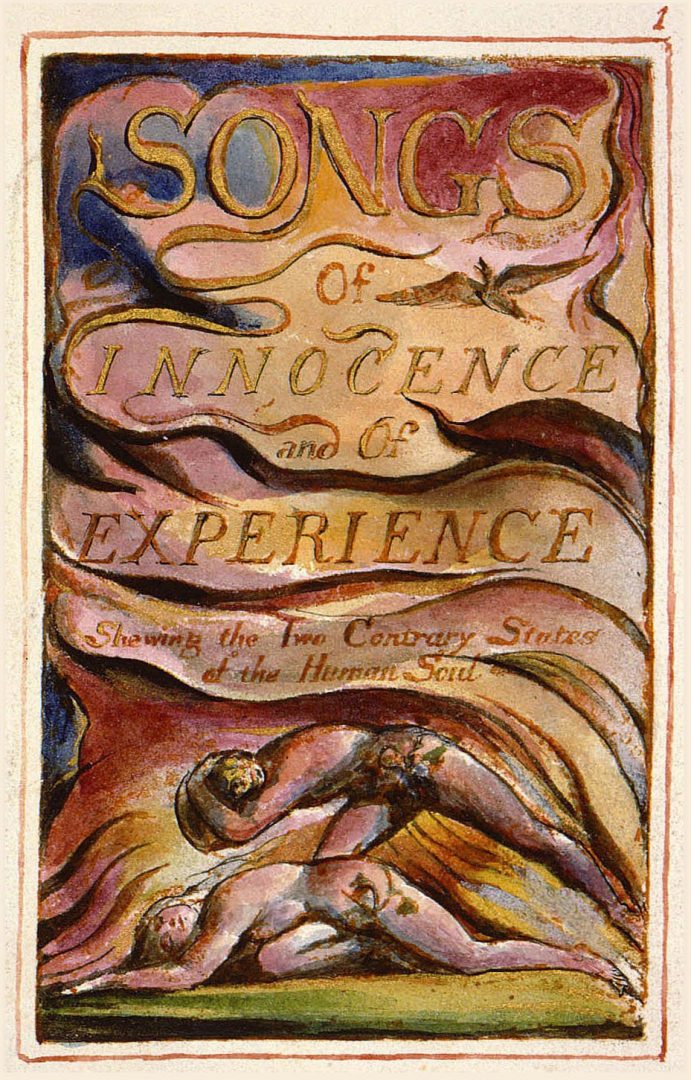 1625 to 1642 some arguing was going on between the Parliament and King Charles I, until a Civil War broke out.
In the beginning, Charles asked for money, but Parliament refused to lend him any. After taking that money anyways, Charles introduced new taxes on Britain, however, he got greedy and raised them continuously. Charles, monarch of a Protestant country, sneakily began adding Catholic things to the Church of England. When people started noticing this, they had strong suspicions that he was a Catholic himself. The main cause of this war was the struggle of finding a balance between the power that both of these sides had. The Parliament wanted more and more power while the King wanted all the power for himself and his family. The trigger to this major conflict was the Parliament’s ‘Nineteen Propositions’, a list of irrational demands for the King. This was too much and on 22 August 1642 Charles I declared war on his own Parliament.
In geography, we have been studying globalisation. We studied how our world is slowly shrinking. Globalisation is the process by which our world is becoming increasingly interconnected. We now communicate, travel, trade and share each other’s cultures more easily around the world. We also studied employment structures. All jobs can be split into four different sectors: the primary, secondary, tertiary, and quaternary sectors. The primary sector was mainly popular before industrialisation, while the other three shot up during and after industrialisation. The graph that shows this transition is called the Clarke-Fisher model. As a country increases its wealth or develops, the number of people employed in each sector changes. There are some positive and negative outcomes of globalisation, however. One main advantage is that it can bring jobs to poorer people. An example of a negative outcome is that cultures and traditions can be lost in the huge amounts of things we have available to us in this modern world.
At the very beginning of September, we started our main topic: Mental Health. With this, the first thing to do was  get down the basics. We studied bad habits, how they form, and how stress works. For example, bad habits like nail-biting or even smoking can be caused by boredom or stress.
Next, we learned about how to break a bad habit. To break a bad habit there is a 7-step process that goes from just describing your habit, to what you and others objectively think about it and finally to how committed you are to it.
Afterward, we covered the reward system. The reward system is a circuit which brings us every positive emotion, every pleasure we have.
Later, we learned about the goals we set and the processes we have to go through to achieve them. We learned that it is important to “fall in love” with the process and not the goal. This means that once you achieve your goal, you won’t feel as excited as you did while you were in the process.
The last thing we’ve learned so far is time management. How we use the time we have is crucial to managing our mental health. Most people’s rational side would tell them to maximize their free time to relax, but in reality, we should continue working with our brain, not overworking but enough to keep it strong and healthy.
By Anthony and Viola