
Children are naturally drawn to playing outside and there are numerous benefits of outdoor exploratory play which have a real positive impact on children’s lives. They have the chance to connect with the natural world and have first hand experiences of life and growth. There are endless opportunities for creativity and imagination not to mention improved fitness, developed muscle strength and coordination.
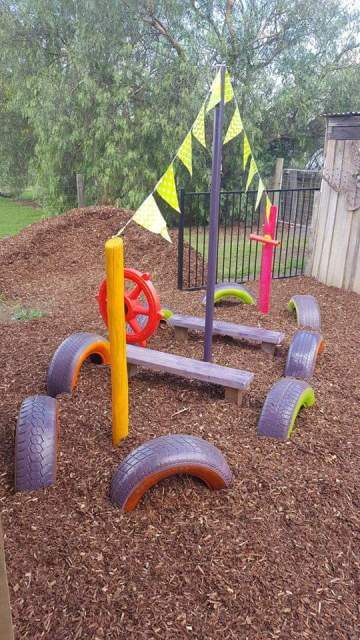
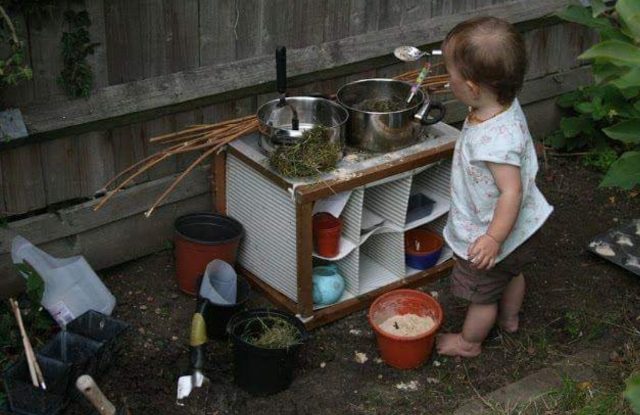
The importance of outdoor learning and play was ‘formally’ recognised by the introduction of the Early Years Foundation Stage (EYFS) guidance in September 2000. The Practice Guidance (DCSF 2008, 1.16) refers to play being the underpinning factor in Early Years education and that opportunities to play indoors and outdoors must be provided. The document refers to outdoor play as offering “challenge and enjoyment” and this is reiterated by the Principles into Practice card 3.3 (DCSF 2008) which acknowledges ‘that a rich outdoor environment that is safe and secure, yet challenging, helps support children’s learning and development’.
The ‘Early Years Foundation Stage’ for children 0-5 years old groups children’s development and learning into seven areas and the outdoor learning environment should be rich, rewarding and challenging and support all seven of these areas.
1. Personal, Social and Emotional Development
Outside is a natural environment for children and there is a freedom associated with the space which cannot be replicated inside. If children feel at home in a particular space it seems natural to teach them in that area; education should not be a burden but an enjoyable experience. Children playing and learning in an outdoor environment appear more active, absorbed, motivated and purposeful, and develop a more positive attitude to learning.
When children are young, their social skills are constantly evolving; when they play in a group they learn to negotiate plans with their friends, extend and elaborate ideas and to co-operate, share and take turns. The role of practitioners is to support children in developing relationships as well as to ensure inclusion.
The environment where we work and play affects our emotions. Children will often be less inhibited outside, and more willing to join in with activities, talk and come out of their shells. In overcrowded spaces children’s behaviour can change, some can become more unsettled, while others become more solitary. Exercise improves children’s emotional health, allowing for relaxation and calmness and a heightened sense of well being.
2. Physical Development
The outdoors is the perfect place to learn through movement, which is one of the four vehicles through which children can learn (the others being play, talk and sensory experiences). All of these happen more naturally outside, and so it is important that children have lots of space and opportunities to move in different ways. In a school setting, activities suitable for young children include running, jumping, climbing, digging, crawling through and under things, using tricycles and bicycles as well as playing ball.
There are also clear health benefits associated with outdoor learning and the NHS (2018) guidelines states that children under 5 years old need three hours exercise a day and that it should be with a mixture of bone strengthening, muscle building and cardiovascular.


3. Communication and language
The current emphasis on provision of good quality outdoor play for children in the Foundation Stage (EYFS) has increased awareness of the learning that takes place when children are physically active. Some of children’s most developed language emerges naturally when they are playing outdoors, and for many children the opportunity to run around being nosiy is denied them in other contexts.
Children are motivated to talk through stimulating experiences and Early Years practitiones should create a relaxed, supportive environment in which children feel safe and valued, and at every opportunity throughout the day aim to promote high quality talk that develops children’s confidence, speaking and listening skills.
4. Literacy
In early years settings, it is important that children are exposed to songs and stories every day and these activities can take place outdoors too. In order to extend this area of learning and development, practitioners can encourage children to engage in role-play scenarios linked to their favourite songs, rhymes and stories. Opportunities for the development of early mathematical and literacy skills (such as letter and word recognition and counting and number recognition) can also be explored outdoors whereby children can participate in scavenger hunts, or make numbers, letters and words from natural objects they find outside or write them on the ground with chalk or sticks.
Children should also have ample opportunities to explore painting on large vertical spaces and can be encouraged to make their own DIY nature paint brushes using natural objects such as twigs and branches. Providing children with time to explore and manipulate nature objects is fundamental for creative and open-ended play.

5. Mathematics
Hands-on use of real objects is the cornerstone of developing mathematical understanding and as with all learning, engagement is the key. So the outdoors is the perfect place to develop those early math skills, whether it is through counting conkers, pacing out distances or finding shapes we recognise in the world around us. Role-play can also be incorporated into math and literacy learning for young children in the outdoors such as setting up a shop, a post-office, a building site, a garden centre, a restaurant or a pirate ship; the list is endless and children thrive from these exploratory play moments.

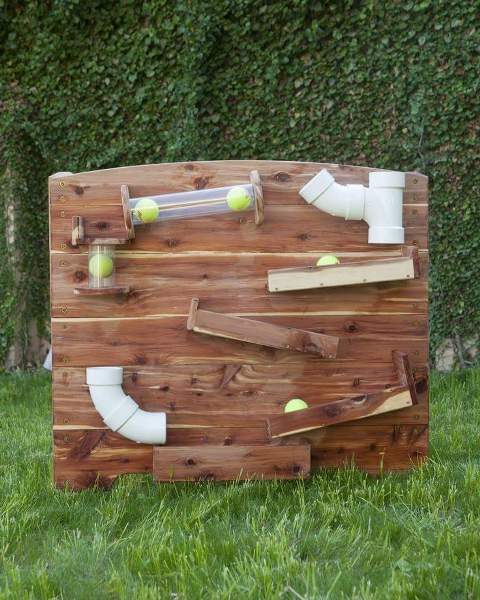
6. Understanding the world
Where do we begin with this area of learning? Outdoor exploratory play is the perfect opportunity for young children to ‘observe, talk about and ask questions about aspects of their natural world such as plants, animals, natural and found objects’ and ‘to show care and concern for living things and the environment’ (EYFS). Children can learn about the weather, the seasons, growth, habitats, life cycles, light and dark; the list is endless. We are in nature’s classroom and should always aim to make the most of it.

7. Expressive arts and design
Nature is full of open-ended resources that stimualte children’s imaginations; for example, a simple stone could be a piece of buried pirate treasure, or food for a wolf, or something to draw on or paint. It could also be used for literacy and math development such as counting and/or letter recognition or used creatively to make a beautiful decoration. Leaves, berries and twigs also provide a wide range of exploratory opportunities for young children and can be transformed into and used for many different things. The fundamental part of outdoor play is using what we find for imaginative and exploratory pay as well as or building and creating.


Characteristics of effective learning
This part of the Early Years Foundation Stage (EYFS) curriculum describes children’s attitudes to learning and ‘how’ they learn rather than ‘what’ they learn. If positive habits are formed in the early years, children will be able to apply these learning styles throughout their lives.
1.Playing and exploring: Finding out and exploring: children show curiosity and use all their senses to explore the world around them and engage in open-ended activities.
Playing with what they know: children have endless opportunities for role-play and for testing out ideas.
Being willing to have a go: children have lots of opportunities to take risks and show a ‘can-do’ attitude.
2. Active learning
Being involved and concentrating: children are naturally more engaged in self-chosen activities. Given time to extend their play and learning in their own direction, they will enjoy the benefits of staying with a task or an activity for an extended period.
Keep on trying: children persist when challenges occur.
Enjoy what they set out to achieve: there is no right or wrong way to play with open-ended resources; children show satisfaction in meeting their own goals and are proud of what they have accomplished.
3. Creating and thinking critically:
Having their own ideas: children will develop their own games and play and find new ways of doing things.
Making links: children use their knowledge to make predictions and test their ideas.
Choosing ways to do things: problem solving through real life experiences and changing strategy as needed.


Conclusion
Here at ‘Acorn House International’ (AHI) we are extremely fortunate to have so much outdoor space where children can play and explore daily. At the present time we are embarking on a new adventure by extending the outdoor exploratory facilities for children in the Early Years, from Nursery to Year 1. We believe that any learning which takes place inside the classroom can also be replicated and extended in the outdoors and our premises here at AHI is truly the perfect setting!
References
Daly, S., Beloglovsky, M. 2015. Loose Parts: Inspiring play in young children. Red leaf Press
Early Education., 2012. Development Matters in the Early Years Foundation Stage (EYFS). London: Early Education.
National Health Service (NHS) UK. ‘Physical activity guidelines for children’ (under 5 years).
https://www.nhs.uk/live-well/exercise/physical-activity-guidelines-children-under-five-years/#toddlers
su
5.
5.