
“Outdoor learning improves child development, supports mental health and wellbeing, deepens nature connection and promotes more inclusive and engaging learning.” – Learning through Landscapes
What is Outdoor Learning?
An evidence-based approach, Outdoor learning is treating our natural environment as an extension of the classroom. The approach is experiential and seeks to use the outdoor environment as a vehicle for transforming experiences into knowledge, skills, behaviours and attitudes.
Well-constructed and well-planned outdoor learning helps develop the skills of enquiry, critical thinking and reflection necessary for our children and young people to meet the social, economic and environmental challenges of life in the 21st century. (Learning and Teaching Scotland, 2010) In the context of the outdoors, children can achieve a variety of outcomes, often developing transferable skills. Our natural world can offer us opportunities in literacy, maths, science, geography and most importantly, increase our health and wellbeing.
In the aftermath of COVID, we are becoming more aware of our mental health than ever before. Outdoor Learning could be a key factor in supporting our children’s mental health. When we go outside, we feel good. Studies have shown that those who spend time outside report a reduction in stress and anxiety and increased relaxation. There is an abundance of research that suggests making physical contact with soil produces endorphins. Children who struggle to regulate their behaviour indoors, often find success during outdoor lessons due to the open space and ability to move around freely.
 Year 4 design and take part in a barefoot walk for ‘Mental Health Awareness’ Day 2024.
Exposing children to nature deepens their connection with it. By integrating Outdoor Learning into their teaching practices, teachers promote a deeper understanding of sustainability concepts and ecosystem interdependence (Love Outdoor Learning Limited). We are developing the citizens of the future after all. If we don’t foster a love of nature in their early years of life, how can we expect them to protect it as they grow older?
What does Outdoor Learning it look like at Acorn?
With an amazing campus such as ours, Outdoor Learning comes naturally. Whether it may be exploring in the forest during playtime or simply enjoying the wide, open spaces, our pupils have daily access to freedom in the great outdoors.
We also use our environment as a learning tool by making tree rubbings, classifying insects, gardening, den building, sketching and using natural materials to create art work. Acorn teachers are already looking towards the future of education and the futures of our students.
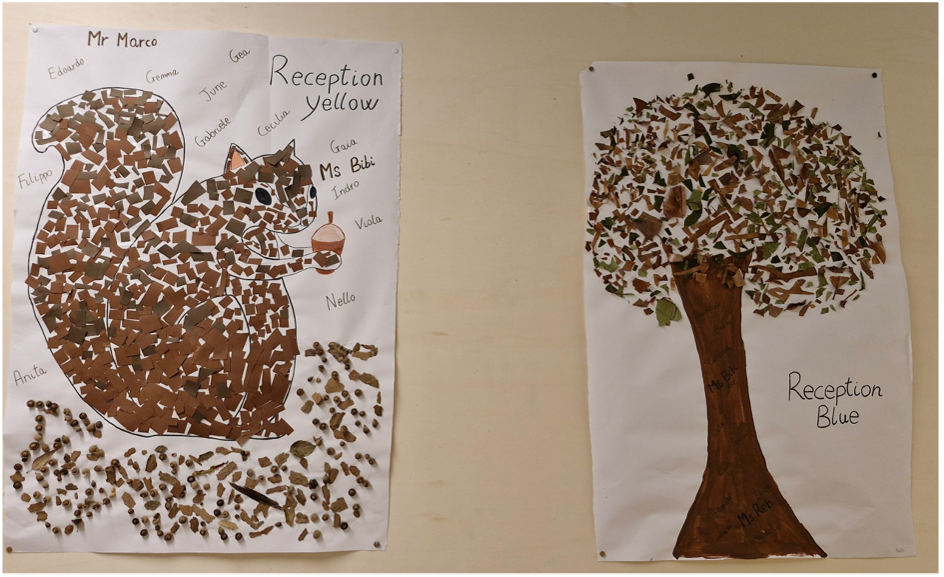
Here, Reception children used natural materials to create beautiful pieces of art surrounding their work on Autumn.
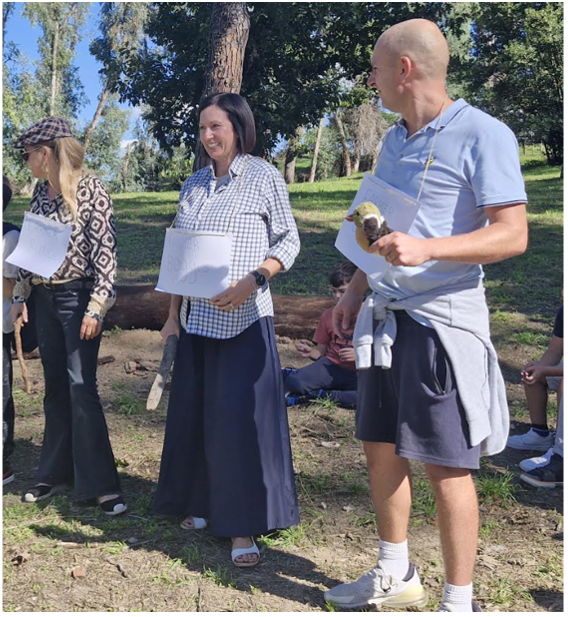
In these pictures, Year 4 brought their class text to life using our amazing forest as a background for their protest against farmers Boggis, Bunce and Bean linked to their topic on Citizenship through Roald Dahl text Fantastic Mr. Fox.

The Shelter
In September, the shelter was built by a group of children from Year 4. Like Rome, it wasn’t built in a day. In fact, it took over three weeks. It started off with two children who found some long sticks and thought they were pretty cool. It ended with members of the class pitching in here and there to create the finished product. I watched children approach and offer items they’d found that they thought would help their classmates. I even witnessed another child make a drum kit out of discarded parts of the shelter.

During the ‘construction period’ , I witnessed an incredible amount of critical thinking and engineering. The meaningful discussion and high-level thinking I scaffold through questioning in class was happening naturally. When the shelter fell down repeatedly, the children showed resilience, never giving up. They couldn’t make the roof work. Like the three little pigs, they tried sticks, they tried leaves, they tried grass but nothing seemed to work until one child had the idea of stripping bark from a fallen tree. Success…until the sticks couldn’t support the weight of it. Ahh physics!
“Don’t put it there. Try over here.”
“Why don’t we try it this way.”
“We can do it.”
“How do we do it?”
Problem Solving. Collaboration.
Cooperation.
A community of learners working together.
“I think we need some string to secure the sticks on the roof.”
“We don’t have any string.”
“Why don’t we use grass?”
“Maybe that will work!”
“I’ll give you biodegradable string next playtime.” (Me)
Ingenuity. Creativity. Engineering.
At one point they found a huge branch. It looked dangerous. I was tempted to intervene as teachers like to do. Safety first. But I didn’t need to. They came to the conclusion on their own.
“It is really heavy.”
“We shouldn’t lift it too high.”
“Maybe it could be a door.”

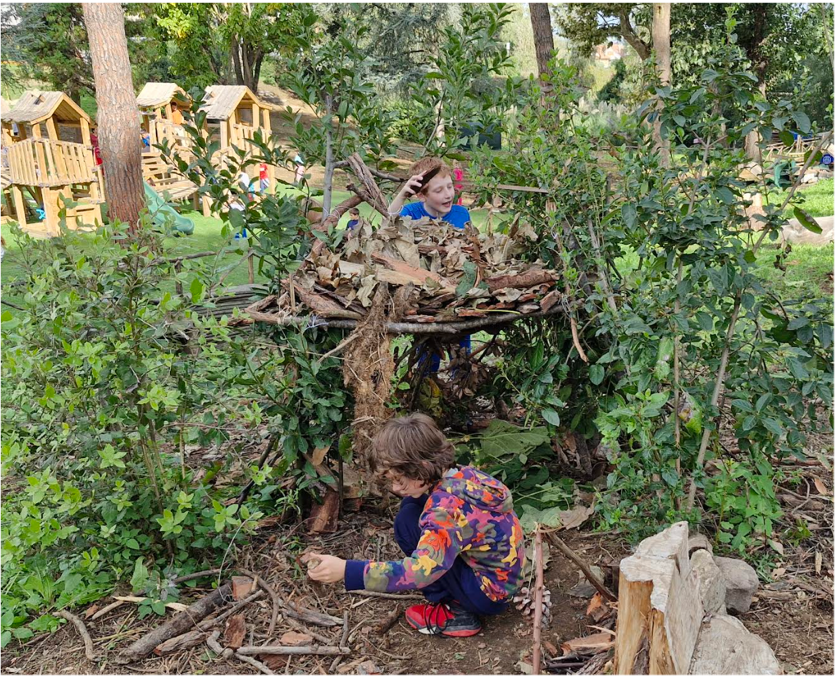
Watching them, I saw pupils who were quiet in class become leaders. I saw children ,who at times appear shy, demonstrate confidence. I saw children who worry about making mistakes take risks.
I realised that in building the shelter, they were developing the skills they need to be successful in this 21st Century world…and they didn’t even know it. To them. It was fun at playtime.
Educational Sources:
https://ltl.org.uk/free-resources/
https://education.gov.scot/media/isxg4lb0/cfe-through-outdoor-learning.pdf