
Play is the natural way in which children learn. It is the process through which children explore, investigate, recreate and come to understand their world. Play is an activity in which everything that a child knows and can do is practised or used to make sense of what is new.
For many adults, the words Maths and Play have absolutely nothing to do with each other. For many of us, maths was a torture, something we had to do, and something we didn’t understand and couldn’t do. Play on the other hand was something we loved.
How can we support our children in their play and in acquiring essential maths skills at the same time?
Math is everywhere! It’s in the world that surrounds us, it’s in nature, and it’s in your home, both inside and out. By pointing out the math in everyday life, you can help your young child learn some basic concepts and understand why math is so important.
In fact, you can really reinforce the math your child is being taught in school with practice at home. Math at home doesn’t have to happen sitting at a desk. During playtime, on a walk, while you’re cooking dinner, or when your child is just looking for something to do—these are all great opportunities to suggest a math activity. Here are a few ideas that will help your children discover— and use—the math around them.
In the play area:
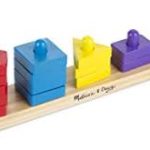
- Count blocks as he or she builds a tower.
- Sort toys by size, kind, or color.
- Put dolls, cars, or blocks in order from largest to smallest.
- Play “What am I thinking of?” by describing a toy’s size, colour and shape.
- Play the shop game and use play money.


In the kitchen
- Look for familiar two-dimensional shapes—circles, squares, triangles, etc.—like a round plate or square napkin.
- Put cans of food in order by size or type.
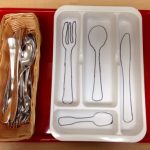
- Sort silverware from the dishwasher to the drawer.
- Count plates, utensils, cups, or even olives.
- Divide a plate of cookies evenly so that each family member gets an equal share and decide what to do if there are some left over.
- Find how many glasses of milk are in a full bottle of milk.


When cooking
- Sorting ingredients in types or colour.
- Weighing the ingredients and have them tell which one is heavier or lighter.
- Measuring liquids.
- Dividing a cake in half, then in quarters, and eighths.
-
-


Around the house
- Count the days on a calendar until a special event.
- Find the length and width of a room by pacing it.
- Measure different objects using a tape measure.
Outside the house
- Plant a garden with rows and columns of seeds.

- Count the petals on different flowers.
- Measure a sunflower or bean plant daily, keeping track of how it grows.
- Count how many times he or she can jump a rope or shoot baskets in a row.
- Keep a daily chart of the temperature.
- Find triangles, squares, circles, and rectangles around the neighborhood.

The range of mathematics explored during free play is impressive and parents can easily use everyday experiences to reinforce and develop mathematical skills and support their kid’s learning of this important subject area. Showing how maths is used in daily tasks provides the perfect balance for the formal learning of the classroom. Mathematics is an area where both teacher and parent input is necessary.